Upholstery Cleaning in Olive Branch, MS
Your sofa probably gets more daily use than any other piece of furniture in your house. People sit on it, sleep on it, eat on it, and spill on it. Pets claim their corner. Kids drop crumbs between the cushions. And slowly, over months and years, the fabric accumulates a layer of body oils, dead skin, food residue, pet hair, and dust that no amount of vacuuming fully removes.
You notice it when the color starts to look muddy, or when the armrests darken where hands rest every evening. Sometimes you notice it when someone sits down and a faint smell rises from the cushion.
Safe-Dry Carpet Cleaning of Olive Branch cleans upholstered furniture using the same low-moisture, hypoallergenic method we use on carpets. The process pulls embedded grime out of the fabric weave without soaking the cushion foam. Your furniture is ready to sit on again within about an hour.
How We Clean Upholstery — 6 Steps
Step 1: Fabric Assessment
We check the manufacturer's care label and evaluate the fabric type. Cotton, linen, polyester, microfiber, chenille, and standard blends each have different tolerances for moisture and agitation. Some need gentler treatment than others, and we adjust before we start.
Step 2: Spot Testing
We apply a small amount of cleaning solution to an inconspicuous area — usually the back or underside of a cushion — to confirm the fabric is colorfast and responds well. If anything looks off, we modify our approach or let you know before proceeding.
Step 3: Dry Debris Removal
Loose crumbs, pet hair, dust, and dry particulate get vacuumed from the fabric surface, cushion crevices, and frame seams. This step removes the dry soil that would otherwise turn to mud when moisture hits it.
Step 4: Targeted Pre-Treatment
Armrest darkening, head marks on the sofa back, food stains, and pet spots each get a targeted pre-spray. The formula is hypoallergenic and breaks the bond between soil and fabric fibers, making extraction more effective.
Step 5: Carbonated Low-Moisture Cleaning
The carbonated solution works into the fabric weave, lifting embedded oils and grime to the surface where we can extract them. Because the process uses so little moisture, cushion foam doesn't get saturated. This is critical — saturated foam takes forever to dry, develops odor, and can even grow mold inside the cushion where you'd never see it.
Step 6: Fabric Grooming and Air Drying
We groom the fabric nap back to its natural direction and let the piece air dry. Most upholstery is ready to use within an hour. No flipping cushions on end, no running fans overnight.
Why Upholstery Gets Dirty Faster Than You Think
People don't think about upholstery the way they think about carpet. Carpet gets vacuumed weekly — it's visible and people are conscious of it. But a sofa that looks fine from across the room may be holding pounds of accumulated debris in the fabric and cushion layers.
Here's what builds up:
- Body oils and sweat. Every time someone sits down, their skin transfers oils to the fabric. Over time, this creates that grimy look on armrests and headrest areas.
- Pet dander and hair. Pets shed constantly. The hair works its way into the fabric weave, and the dander — invisible to the eye — triggers allergies and adds to the overall soil load.
- Dust mite colonies. Upholstered furniture is one of the most common habitats for dust mites in any home. They feed on dead skin cells, and the warm, humid conditions inside a cushion in a DeSoto County home are ideal for their reproduction.
- Food particles and spills. Even careful eating on the couch leaves micro-deposits between cushions and in the fabric weave.
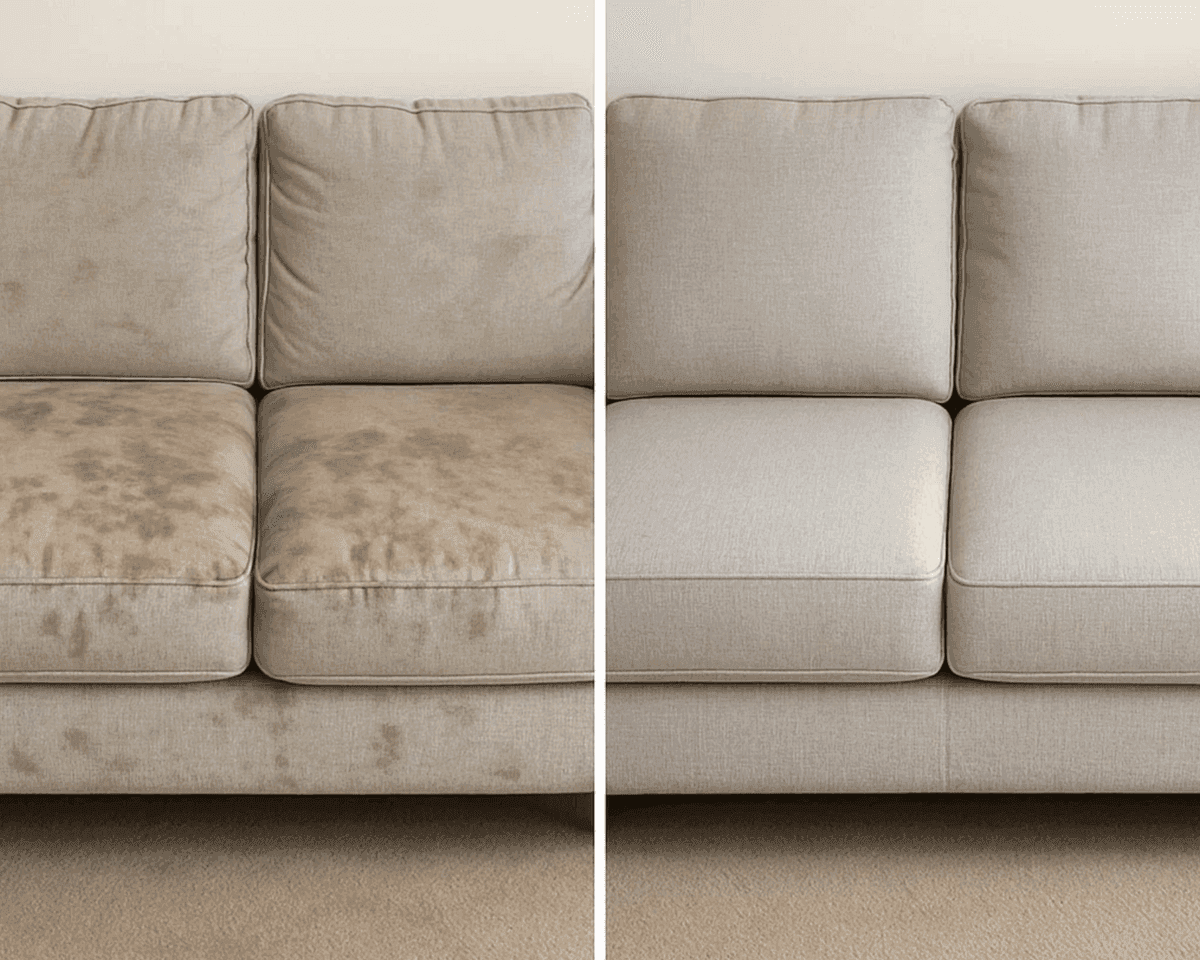
Professional extraction removes all of this. The visual difference is often striking — a lot of people are genuinely surprised at how much brighter the fabric looks afterward.
Pieces We Clean
Sofas and sectionals. The pieces that get the most use and show the most wear. We clean the full surface including backs, arms, seat cushions, and frame edges.
Recliners and armchairs. Recliners develop heavy soiling on the headrest and arm areas from daily use. We treat those zones with extra attention.
Dining chairs. Fabric dining chairs absorb food spills and cooking grease over time. We clean them per piece and they're ready for the next meal the same day.
Accent chairs and ottomans. Any piece with fabric upholstery is fair game. If it has a cushion or a fabric surface, we can clean it.
Window seats and built-in benches. Custom upholstered features in newer Olive Branch homes get the same treatment. We work with whatever fabric is there.
Frequently Asked Questions
Will my sofa cushions stay wet overnight?
No. We use very little moisture, so cushion foam doesn't get saturated the way it would with a steam cleaner. Most upholstery is ready to sit on within an hour. No fans required.
What fabrics can you work with?
Cotton, linen, polyester, microfiber, chenille, and most standard blends. We check the care label and spot-test before starting. Genuine silk, velvet, or exotic materials may need a specialized approach — we'll tell you upfront.
Does this help with allergies?
Yes. The process extracts embedded pet hair, dander, skin cells, and dust mite waste from the fabric weave. People with respiratory sensitivities often notice a difference within the first day, especially on pieces used daily.
Can you clean dining chairs and small accent pieces?
Absolutely. Dining chairs, accent chairs, ottomans, window seats — anything with fabric upholstery. Pricing is per piece, and we can quote it over the phone.
How often should upholstered furniture be professionally cleaned?
Every 12 to 18 months for everyday pieces. Sofas in homes with pets or young kids benefit from cleaning every 6 to 9 months. You'd be surprised at the color difference even one cleaning a year makes.
Upholstery Cleaning in Olive Branch and DeSoto County
We serve homes throughout Olive Branch, Southaven, Hernando, Horn Lake, Nesbit, and Byhalia. Call 662-932-3313 anytime — we're open 24/7 and can usually give you a quote right over the phone.